Starting next school year, there will only be one intensive: winter. Among the many changes the new schedule will bring – for better or worse – with the removal of the spring intensive, the length of the second semester will increase, and the placement or existence of LaunchPad and Humanities are impacted.
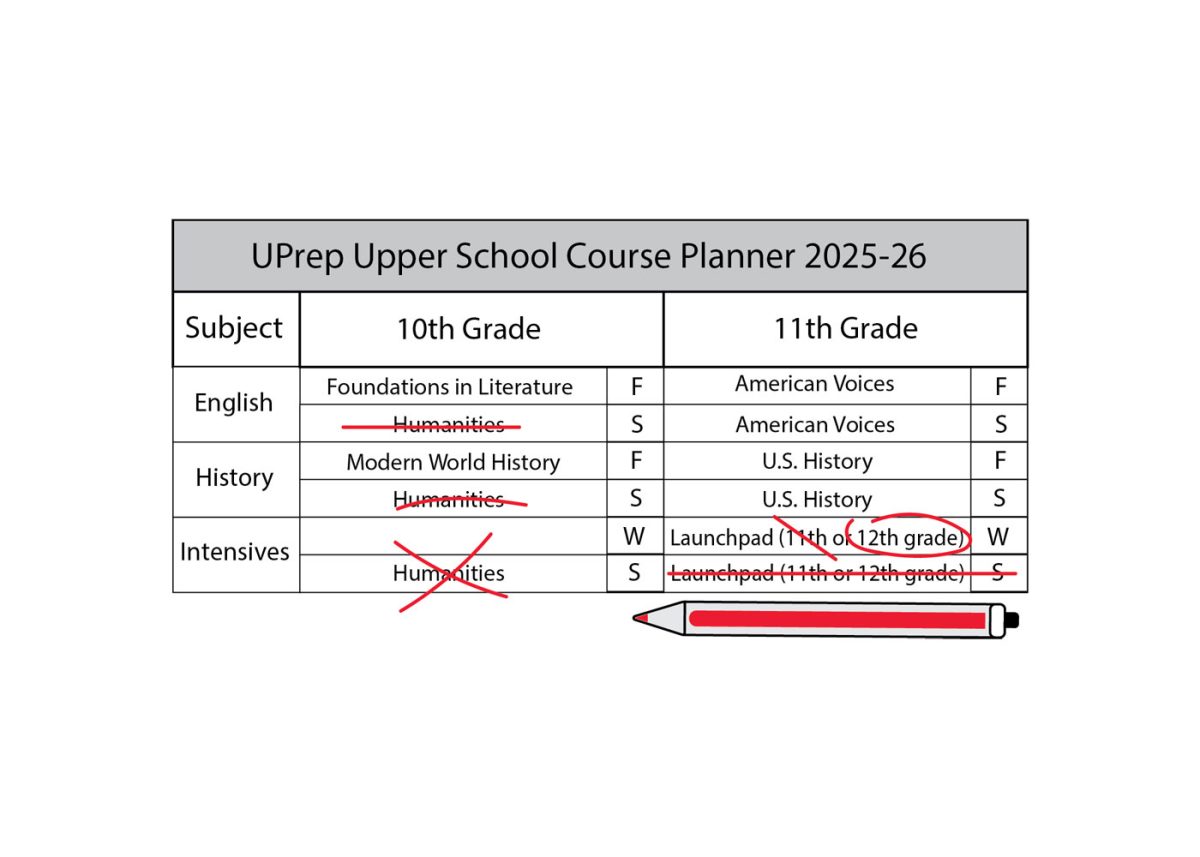
LaunchPad, an independent student project by juniors and seniors, is an intensive-only program. Due to the new schedule’s single intensive, LaunchPad will only be available for seniors starting in the 2027-28 school year.
The core of LaunchPad and expectations for students will not change: “the blogs, the paper, the presentation,” according to Assistant Head of School for Academics, Ed Billingslea.
“Launch Pad is the closest thing to a college experience,” Billingslea said.
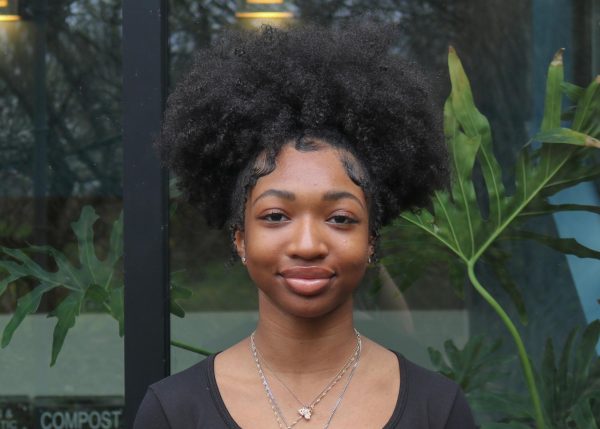
Students typically choose to shadow a professional in their area of interest, who serves as an off-campus mentor. Junior Lucinda Roraback will take the LaunchPad Intensive this spring, where she’ll intern with a family friend who does marketing for global health agencies. This aligns with her interest in marketing, advertising and international affairs. Roraback is not a huge fan of the schedule change, as she believes it’s taking away respect and mindfulness towards the student experience.
“I think that one of the great things about Launch Pad is that it gives you so much freedom,” Roraback said. “But when you’re making [us] do it at [one] time, it’s going to be harder because some things will have more opportunities during different times of the year depending on the industry. There’s definitely on and off seasons.”
Humanities, currently a required second-semester class and spring intensive for sophomores, will not be offered next school year. Now for the full year, students will take Foundations in Literature for English and Modern World History. The extended semester will allow students to develop a deeper understanding of coursework, and for teachers to include more content, according to history and Humanities teacher Susan Lamberth.
Despite the change, the courses will cover the same material. The history department’s goal is to incorporate more texts and go further in depth for topics discussed, according to Lamberth.
“We are always adapting,” Lamberth said. “Every single year I change something to keep up with the times, to keep up with new information, to keep up with new interpretations, or just to keep things interesting.”
Sophomore history and English will be taught more attentively, which aids in skills needed for junior year, according to Billingslea.
“We’re basically moving interdisciplinary [work] from 10th grade to 11th grade, and then more skill building in the 10th grade,” Billingslea said. “That full year of English and that full year of history [will] prepare for that interdisciplinary work the junior year.”
Ninth grader Raheem Benazouz is happy about this change.
“I’ve heard Humanities is not the best class, and I think English and history are better alone,” Benazouz said. “I feel like they connect in certain ways, but some things should be separate.”
Sophomore Jonathan Lopez Flores, however, prefers Humanities over having English and history separate.
“I think it should remain a class,” Flores said. “Humanities is just better workload wise… you only manage one class.”
The change to full-year sophomore English excites English department chair Carrie Niebanck as it allows for students to experience less “disjointedness” and more fluidity from ninth grade to junior year. But, she acknowledges that the loss of the Humanities course means a loss in the diverse topics offered: Geography of Health, Ethics of Tech, Art of Protest and Migration of People are sections for the intensive.
“It was really beneficial because there was a lot of choice involved in that intensive,” Niebanck said. “The tracks that students can choose from really created a lot of buy-in.”
Roraback, who was in the Art of Resistance section for the intensive, enjoyed looking at English and history through a different lens through the Humanities class, as it allowed variety in how students learned.
“One of the things people like about UPrep is that it’s not a completely traditional classroom setting,” Roraback said. “By taking away so much creativity in the curriculums, by limiting LaunchPad, Humanities, intensives generally, I think you kind of lose some of what is the spirit of UPrep as I see it.”