
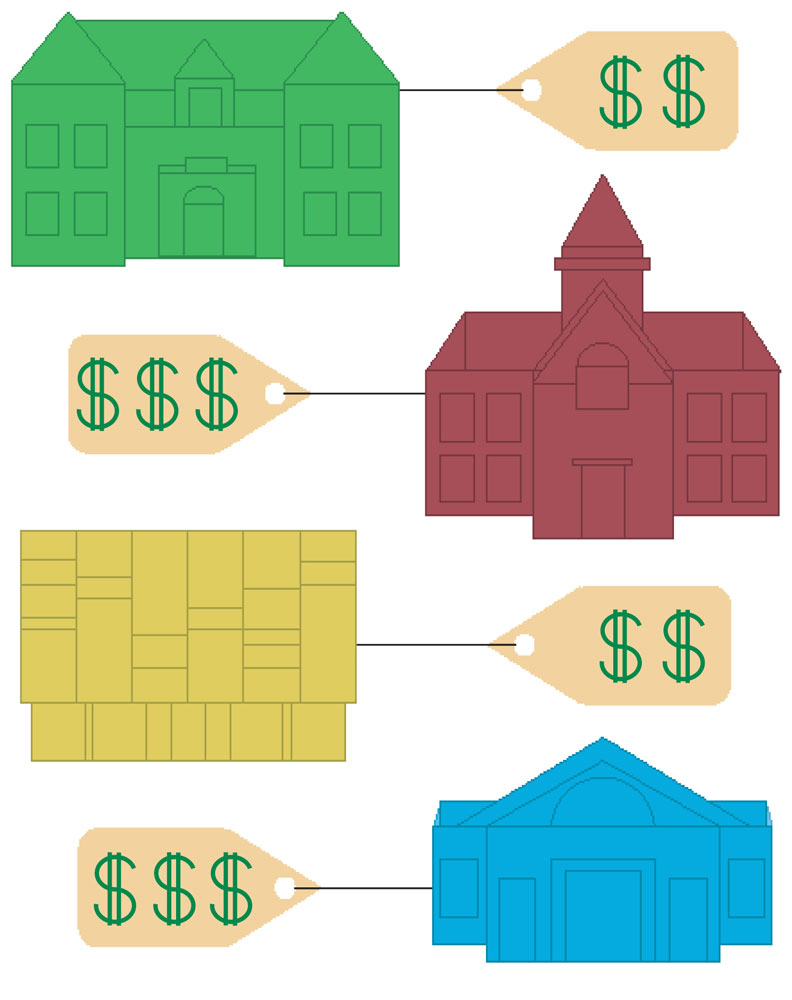
Census data reveals that more students than ever are enrolling in Seattle private schools, but the price of admission is rising too. Top schools like Lakeside, Overlake, University Prep and Bush cost about $50,000 a year, which is far above the citywide high school average of $24,212, according to an article in The Seattle Today.
Private school tuition in Seattle has grown steadily for the past decade, and the tuition gap between these Seattle private schools and the citywide average private school tuition continues to widen. For the 2026-27 school year, UPrep’s upper school tuition is set to cost $48,690; a notable difference from six years ago, when it cost $36,750.
Susan Lansverk, the assistant head of school for finance and operations, explains what goes into the cost.
“Most of what we’re paying for is salaries, and we have to pay salaries that allow people to be able to live,” Lansverk said.
According to the U.S. Bureau of Labor Statistics, inflation in Seattle is up 3.9% from last year, and housing costs are more than 100% higher than the national average. The school carefully considers inflation while setting the tuition.“We need to know what is inflation—because inflation both cost of living and cost of labor—go into figuring out, what should our salary increase be?” Lansverk said.
“We need to pay more to be competitive in the market, the main place where that is paid for is by tuition,” Lansverk said. “All of the schools in Seattle are going to have that.”
At UPrep, tuition has increased by nearly $20,000 over the last decade.
“Tuitions don’t go down, because that would mean you would have to cut programs, or you would have to cut people, or you’d have to really increase your class size,” Lansverk said.
Despite other school’s rising tuition, Seattle’s religiously affiliated private schools remain closer to $25,000 a year. Bishop Blanchet, for instance, lists tuition at $25,300.
“It’s connected to the Catholic Church, and they get funding through the archdiocese,” Lansverk said. “Some schools, religious based, usually have other funding besides tuition.”
For sophomore Anya Arnold, the rising cost of tuition made her family’s choice to send her to UPrep more complicated.
“My family chose UPrep, knowing it had such an expensive tuition, because they knew in the long run, it would pay off for me,” Arnold said. “Especially having ADHD, I need more support.”
For Arnold’s family, the decision also relied on additional financial support.
“My grandparents have offered to pay for my college tuition,” Arnold said. “In my parents’ mind, it justified sending me to a $50,000 school.”
UPrep also offers financial aid. About 17% of the student body receives financial support from the school. For Arnold, however, that was not an option. Financial aid is reserved for families who can demonstrate need.
“With that college being paid, that doesn’t mean that paying for this $50,000 school is just a little drop in the bucket of money,” Arnold said. “Paying this much for a school isn’t easy.”

