
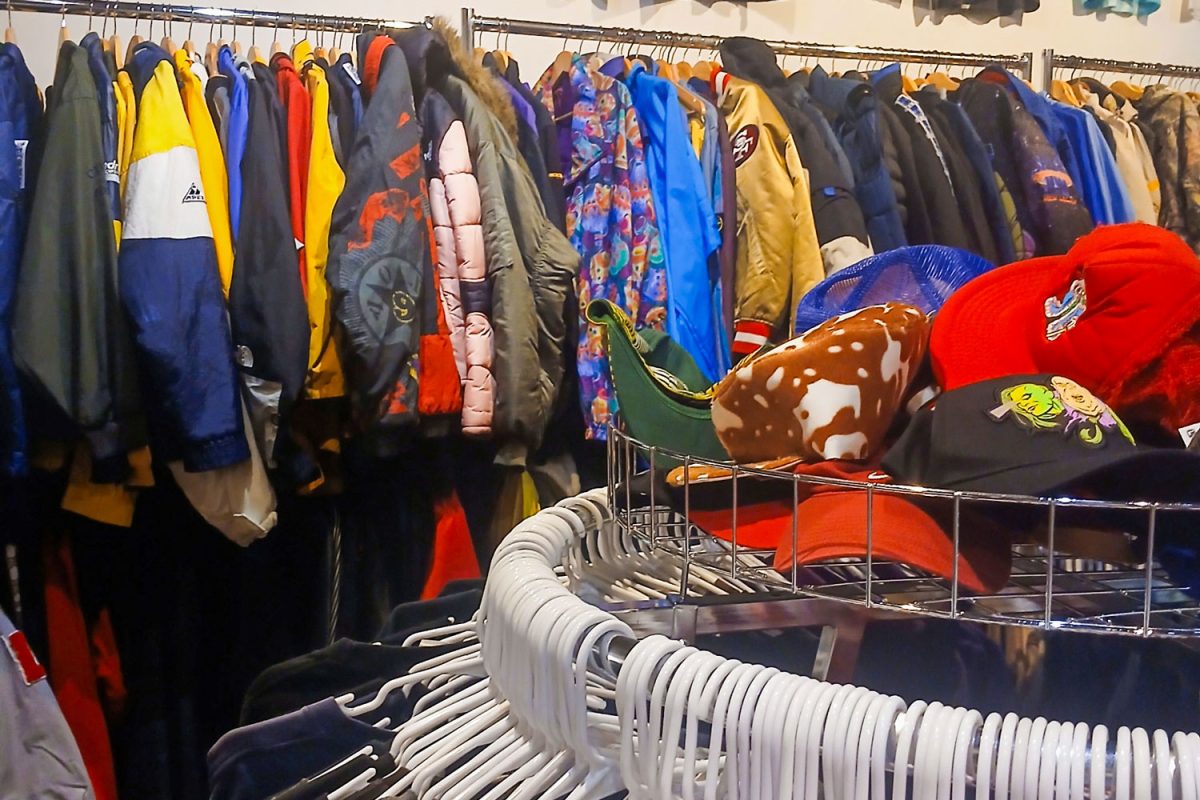
When sophomore Kayla Billingslea walks into UPrep each morning, she notices crowds of students dressed almost identically. She identifies many items as products of the fast fashion industry. The brands that dominate nearby malls have translated to the uniform for schools nationwide, causing ecological and ethical concerns amongst students and professionals.
The term “fast fashion” is used to describe a system of clothing production that focuses on creating large amounts of items cheaply and quickly, prioritizing profit over quality. Fast fashion brands such as Temu, Shein and H&M typically use social media marketing and low prices to ensure that consumers are constantly buying new clothes.
The U.S. fast fashion industry was worth $41.15 billion in 2023, and that figure is estimated to climb to around $59.85 billion by 2030, according to the global market intelligence company, CoherentMI. Catherine De Almeida, associate professor in landscape architecture at the University of Washington, focuses on the economics of how architecture and design impact the environment.
“In the context of fast fashion, it is about consumerism. It is about the bottom line,” Almeida said. “It is about profit.”
Fast fashion companies strategically apply marketing techniques such as high trend rotation to maximize their profits. Senior and co-founder of Thrift Club, Gia Breuder says that fast fashion clothing tends to be lower quality, increasing the production of waste.
“When I took Environmental Science last semester, I did research on that waste, because people don’t keep their stuff for that long, especially with cheap materials like that,” Breuder said. “It affects the lower income countries, because that’s where it all gets dumped. Then it affects the ecosystems and marine life. “
According to the nonprofit Northwest Center, Seattle and King County residents and businesses throw out about 40,000 tons of clothing annually. Ninety-five percent of those clothing items reportedly could have been recycled, but instead contributed to the textile waste present in landfills.
Sophomore and Fashion Club leader Anya Arnold dislikes the fast fashion industry because of its inhumane clothing production practices.
“I really hate it,” Arnold said. “I also hate it, because there’s plenty of kids out there that are in sweatshops and that are packaging the clothes…It’s like, wow, that kid who is also 16 is going through horrible labor, and I’m just wearing the clothes without thinking about it.”
According to the website Earth Day, whose founders helped organize the first Earth Day in 1970, the fast fashion industry currently employs about 60 million factory workers worldwide. Since fast fashion thrives on speed and efficiency, factory workers trade their labor for impossible quotas, poor conditions, and low wages.
According to the United Nations Environment Programme, fast fashion generated more than 10% of annual carbon emissions in 2023. Once clothing items are discarded, only 15% of textile waste is “recycled.” Most fashion is left to decompose in landfills for hundreds of years.
“I think they don’t realize how much of an overstock they’re making,” Billingslea said. “Even though people are overconsuming a lot, so much of their clothes go into landfills.”
Approximately 7.7% of all solid waste present in landfills is textiles, according to the U.S. Environmental Protection Agency. This is largely the result of fast fashion brands maximizing profit.
“I think they’re all structured in the way that they’re cheaper, so more people are gonna buy from them, but they also use worse quality,” Breuder said. “So since it’s bad quality, people will go back and rebuy them… It’s like it’s trapping you into a cycle.”
P. Sean McDonald, associate teaching professor at the UW College of the Environment, strongly condemns brands that use fast fashion production models, as these quick and damaging cycles cause far more harm than good.
“Products are made cheaply, and we use them, and then the trend is over,” McDonald said. “The product is garbage anyway, and so it just falls apart, and then it’s gone.”
Some student shoppers have turned to thrifting as a more sustainable and ethical option. According to a survey conducted by the Puma Press with 63 respondents, 76% of UPrep students buy from thrift shops, Goodwill or small businesses as an alternative to fast fashion.
McDonald supports the thrifting movement because it enables individuals to express their unique style, while minimizing environmental harm.
“Think about selecting pieces that mean something, reuse, thrifting, upcycling, creating your own clothing,” McDonald said. “There’s so many different avenues, and it can be a very trendy thing to do as well, and that’s a trend that actually has a positive impact on the environment.”
While students may feel pressured to buy the newest trends, McDonald highlights the importance of making informed purchases.
“In a culture where consumerism is the norm, making sure that the consumerism that we experience and that we express is done thoughtfully and with consideration to our impact, both on the planet and on other people, is essential.”


