
Flashing lights, blaring speakers, the scent of popcorn wafting up from concessions—this means one thing to many American high schoolers: Football season. Every Friday, crowds of students stream into the bleachers to cheer on their home team.
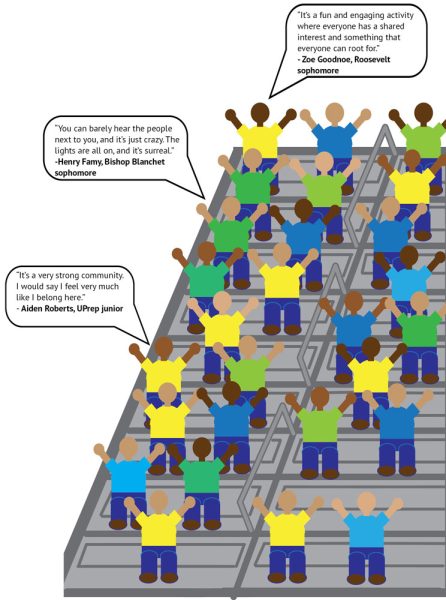
“The atmosphere is pretty crazy. The seats are all filled up, the band starts playing, and they run out with flags at the front, and they’re all cheering,” Henry Famy, a sophomore at Bishop Blanchet High School, said. “You can barely hear the people next to you, and it’s just crazy. The lights are all on—it’s surreal.”
However, the situation is different at UPrep, where attendance at games is typically low. As both a tennis and basketball player for UPrep’s sports program, Sophomore Mikael Harmelin says that sports attendance isn’t the school’s strong suit.
“[I feel like] we might get 20 to 30 kids to show up and support everybody, and we have to bribe them with food, like there’s no one ever at the games,” Harmelin said.
Harmelin moved to UPrep at the start of his freshman year after spending his middle school at Hamilton. While considering schools, Harmelin said he chose UPrep for its academics.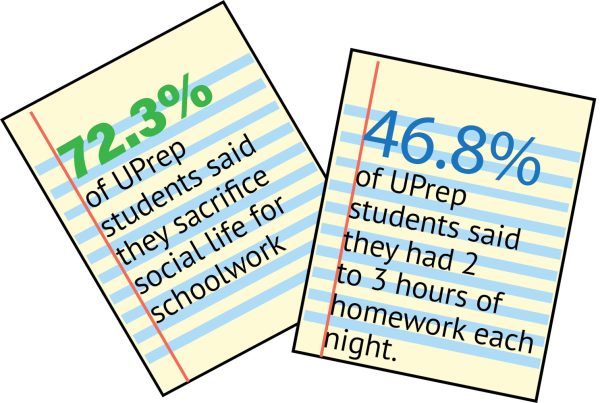
“Although Lincoln seemed more fun, I wanted to set myself up for the future, and UPrep is definitely the way to go for that,” Harmelin said.
His decision came down to family experience.
“My sister went here, and she said it was really good. My brother went to Lincoln. So I got two different perspectives between public and private schools,” Harmelin said.
According to a survey conducted by the Puma Press on Schoology, out of 46 responses from across all four grades, more than 43% of respondents said they felt like “not many” students attend UPrep sports games on a scale of “almost nobody” to “TONS of students”.
Without the draw of Friday night lights, UPrep students are accountable for supporting their peers even in the absence of many traditional aspects of high school sports. Athletic Director Rebecca Moe says that the faculty can’t be the only ones supporting school athletics.
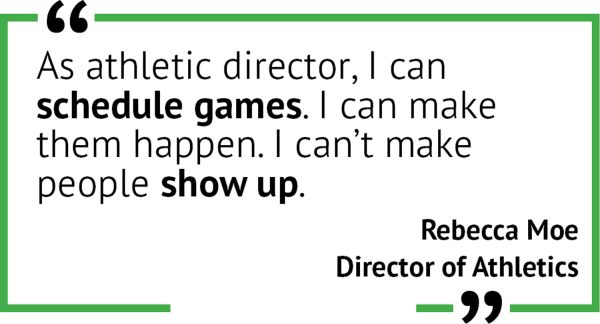
“It needs to come from the students. As athletic director, I can schedule games. I can make them happen. I can’t make people show up,” Moe said.
Two students attending other high schools in the north Seattle area feel that having a football team heightens school pride within their community. School-issued spirit days leading up to a football game positively impact the student body, according to Zoe Goodnoe, a sophomore at Roosevelt High School in Ravenna.
“It’s a fun and engaging activity where everyone has a shared interest,” Goodnoe said. “It’s kind of like cheering together for the same thing unites everyone under one cause.”
Famy is a former player for the Blanchet football team and credits the fact that the school has a home field as a factor in boosting school spirit. Although Blanchet is a private school like UPrep, their student body consists of more than 1,000 students as opposed to the 746 currently attending UPrep.
“We always have people coming down, cheering, doing the school themes, which is why I always tend to go,” Famy said. “It’s just because there’s a sense of community there, because it’s optional, and yet people still really want to go.”

Goodnoe sees her Friday night lights experience as a chance to connect with friends she interacts with less often due to Roosevelt’s larger class size.
“I have friends that I don’t have any classes with this year. So I go to the football game, and I see them all, and I just get to keep those connections up and foster them,” Goodnoe said.
However, Aiden Roberts, a junior at UPrep argues that having a football team isn’t crucial to a high school community.
“I think sports games definitely do have a lot of potential to bring people together when they’re watching it. Yeah, but I mean, it’s not just football that can do that,” Roberts said.
In comparison to other schools, students state that UPrep’s sports program has room to grow. Harmelin argues that simply not enough students try out to form competitive teams.
“I mean, we got freshmen making the varsity team in almost every sport, and not a lot of kids try out. It’s a no-cut program and 1A division,” Harmelin said. “I barely practice tennis, and I was able to play last year on the varsity team.”
Yet Moe says size shouldn’t be a factor that prevents UPrep sports from achieving success within their respective teams.
“Yes, we have a participation base and no cuts, but I firmly believe we strive for excellence at those varsity teams, and we compete to win, and we try to win, and we do win,” Moe said. “I try to make sure that those teams have as many resources as possible.”
UPrep aims to build a community of academically driven students, but the workload can often feel heavy for students. While 50% of upper schoolers have 2-3 hours of homework every night, around 11% of students report having 4-6 hours. However, Goodnoe’s homework at Roosevelt is a different story.
Goodnoe acknowledges that although a large school like Roosevelt provides advantages such as AP courses, there are some setbacks to having a large community. Goodnoe attributes a higher teacher-to-student ratio for causing some students who might need more help to not be able to receive it.
“I can challenge myself, and I think there are options, but I think sometimes teachers don’t really meet every student’s needs on every level,” Goodnoe said.
Roberts appreciates how the lower student-to-teacher ratio at UPrep gives students a deeper connection with their teachers.
“I guess teachers and students are more able to make more personal connections, which in some way can boost learning,” Roberts said. “You can check in, also not about school stuff, about life in general, and things that they know students are up to.”
Senior Paige Johnson doesn’t see UPrep’s lack of AP classes as a bad thing. Johnson believes the addition of AP classes could further the divide between students who take classes such as quantitative chemistry and quantitative physics and students who don’t.
“Already there’s some disparity there. A sense that some people might be smarter or better because they’re taking those classes,” Johnson said. “I think that can create a little bit of dissonance in between some students at UPrep, and so I think the APs could exaggerate that.”
Assistant Director of Admissions at UPrep, Chuck Goodman says that the absence of AP courses likely strengthens the curriculum, rather than harms it.
“The lack of APs empowers our teachers to be responsive to student learning without feeling beholden to follow the AP curriculum word for word,” Goodman said.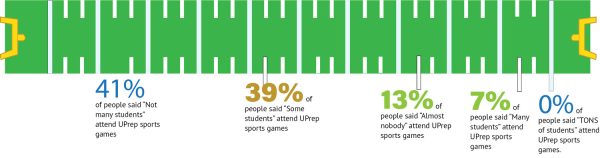
However, regardless of whether AP classes or not at certain schools, course work and sports still inevitably compete for students’ focus.
Famy mentions that his participation on the football team often conflicted with his pursuit of academic success. This led to him dropping out of football at the beginning of his sophomore year.
“Football goes until 8 pm every day, so you have to kind of balance it out,” Famy said. “Do I want to play football, or do I want to have better grades? It’s just all about balance.”
Famy recognizes that there are also social sacrifices that he must make to focus on school work. When polled, 72% of UPrep students recognized that it negatively affects their involvement in the school community.
“Sometimes, if you’re in hard classes and your friends aren’t, it’s a little hard because then you can’t hang out when they’re hanging out,” Famy said.
All 46 students who participated in a Puma Press survey similarly share the sentiment that UPrep is more academic than sports-inclined.
Friday Night Lite
Without football, does the student experience suffer?
December 15, 2025
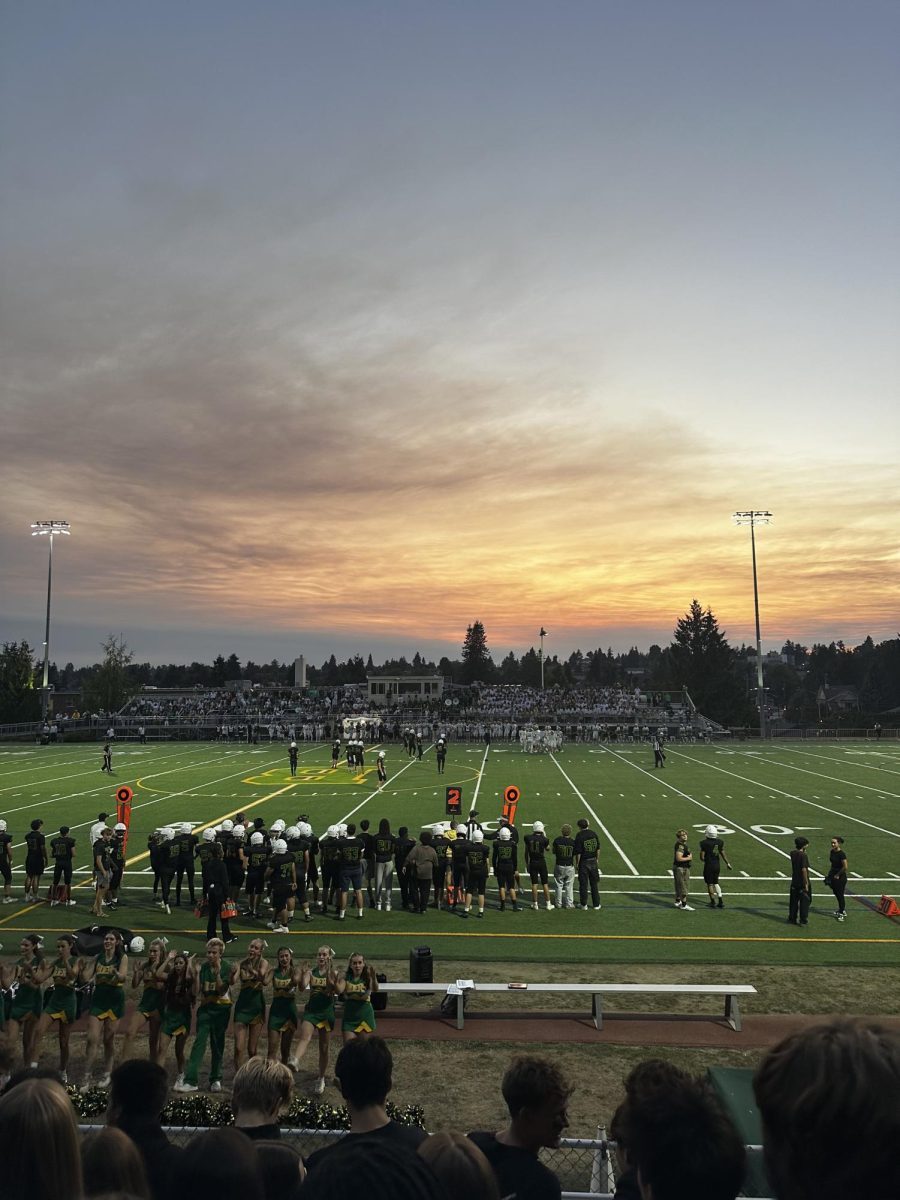
Photo: Chloe McFarlane
Football field with players from the stands.
Donate to The Puma Press
Your donation will support the student journalists of UPrep.
About the Contributors

Lucy Houser, Reporter
Lucy Houser is a reporter on the staff of the Puma Press. She is a sophomore and is new to staff this year. She loves to write news stories that shed light on notable events occurring in our community. Her favorite part of journalism is learning something new and being able to share that knowledge with the rest of the community. Outside of journalism, she enjoys writing and playing soccer.

Tommy Chang, Business Manager
Tommy Chang is the business manager on the staff of the Puma Press. He is a sophomore and this is his second year on staff. He loves to write hard news stories that effect the community in the paper. His favorite part of journalism is meeting new people around the school via interviews and investigation. Outside of journalism, he enjoys playing soccer, video games, and classical guitar.