

Started from the Ground Up


Every day, hundreds of students walk into UPrep’s four main buildings; 50 years ago, the road leading into UPrep, NE 80th St, wasn’t even paved. From 74 students to 745; from rented rooms to four multi-story buildings. Let’s face it: UPrep has grown.
“I’m still amazed when I turn onto 80th,” UPrep Founder Pat Landy said. “I mean, this is our school, and you’ll see we had nothing. We had these little rooms, and now we have a beautiful facility.”
But UPrep didn’t start this way; it started with the founders renting space in Temple Beth Am.
“They were very accommodating with their property and with their support,” Landy said. “When we were still in negotiation, they agreed to upgrade the lighting and the heating so that we could meet the state requirements.”
UPrep would rent rooms from the temple for learning until 1979, when they would build their first building.
“They wanted to be like a college prep school,” UPrep archivist Hannah Morrison said. “To do that, they needed to have space for labs.
Because while you can teach English out of a random classroom in a temple, you can’t necessarily teach chemistry.”
The founders’ decision was made in agreement with the temple.
“They allowed us to build two science buildings on their property,” UPrep Founder Terry Froggatt said. “They were portable; they had to be able to be removed.”
Students, parents and teachers worked together to construct the building.
“It was very much a grassroots group effort,” Morrison said. “I think that really represents the spirit of the school.”
In addition to the building, UPrep added Seattle Public School portable buildings, which served as PE and gym facilities, and the library. Even then, the founders were focused on what UPrep could be in the future.
“They talked about looking at the land,” Director of Upper School Susie Wu said. “There was this plot of land that was at the time, owned by the Picardo family. And this whole land that this school is mostly on, was owned by the Picardo family.”
The proposition came from John MacKinnon, UPrep’s former business manager as well as history and math teacher.
“[He] encouraged the board, which was the founders, to go ahead and purchase the property that was next door to the south,” Froggatt said.
The founders would reach an agreement with the Picardo family, but would not build on the land immediately.
“In the early 80s, we had an architect do a plan to see if, in fact, we could locate the whole school that we were thinking about on that property,” Froggatt said. “And we found out we could, but it was really, really tight.”
The founders decided they would spend time looking around at the city at other properties entirely.
“We looked around at 29 different sites and made offers on 14 of those around the city,” Froggatt said. “Then we came back to this property and said, ‘Well, you know, this seems to be the best that we would like to do.’”
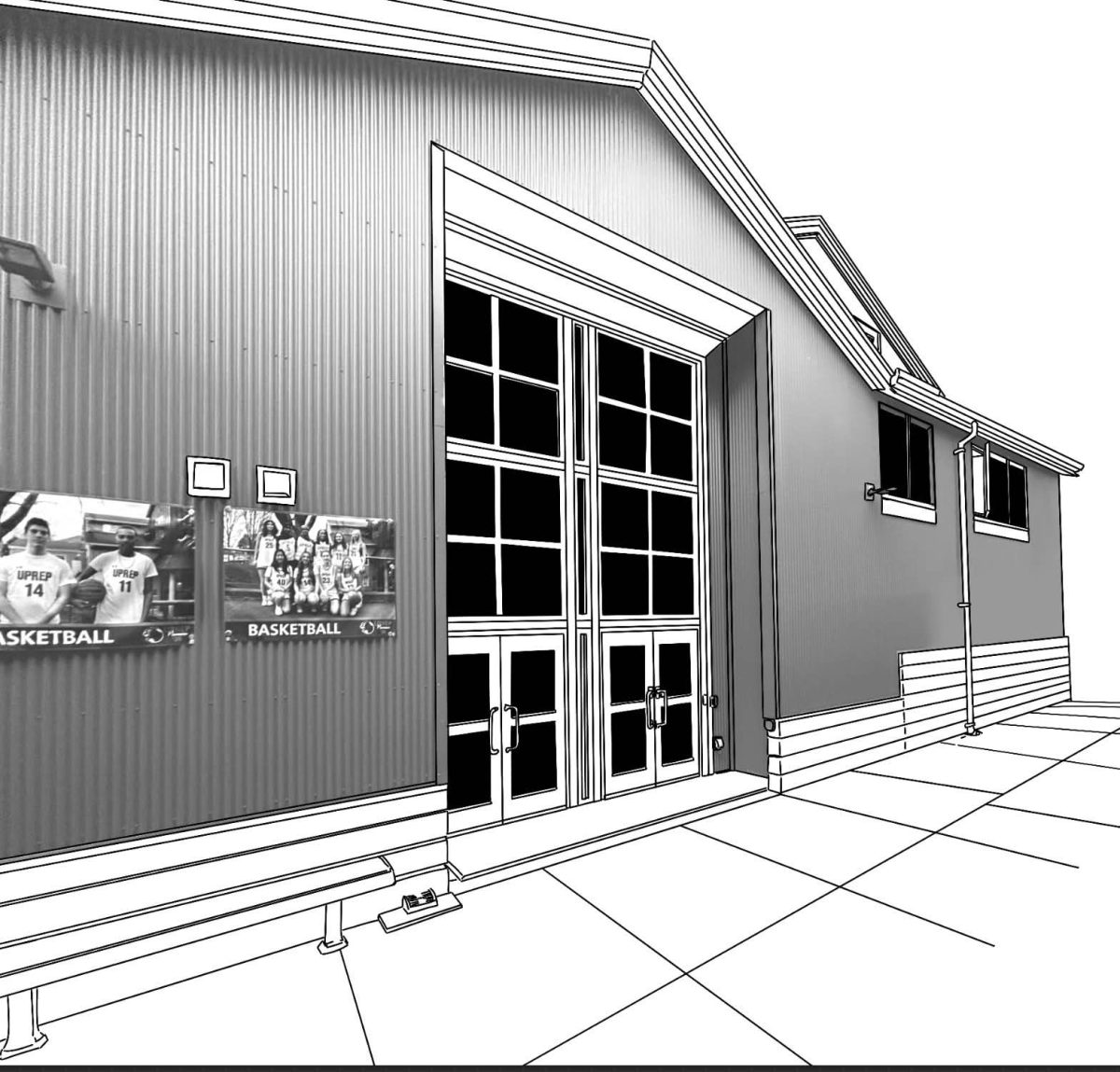
On Oct. 6, 1991, the campus expanded to include 30,000 square feet of space. The expansion included a one-level gymnasium, the two-level commons, the library and classrooms.
Previous buildings like the science and portable buildings were removed.
“It was a big deal,” Morrison said. “It was just kind of reclaiming more of a spatial and physical identity for the school, rather than it just being linked together by a group of people and some temporary buildings.”
The expansion was a large step forward. At the time, the drama and PE departments shared the gym.
“It was quite a wonderful thing to see the faculty talking to each other and making this decision that they could work together in that space,” Froggatt said. “It turned out not to be the best, but at least they were willing to give it a shot.”
Later in 2000 and 2001, the Classroom Building, Fine Arts Building and Admin Building opened. This would be the final bout of physical growth until the ULab in 2024.
“A lot of people had to sacrifice a lot to make the construction happen,” Morrison said. “Parents devoting their time… and students had to wait to have full buildings.”
Since then, UPrep has undergone several smaller rounds of remodelings, including to the gym and commons.
“The gym was kind of one of the first remodels,” Froggatt said. “We have many, many teams, and so in order to accommodate that, and to accommodate other teams coming in, it needed to be bigger. But, you can’t just add on to [the side] so we went up.”
The founders’ philosophy toward expanding the school still stands today.
“What we build always responds to the question, ‘What is best for the students? What did we need to provide for the students?’ And then we could decide,” Landy said. “We needed classrooms. We needed a gym and a theater.
The feedback progress from faculty and students to administration was continual. Because they were building spaces from the ground up, there was room for input.
“Terry tried her very best to provide for us,” Landy said. “Oftentimes teachers aren’t asked, ‘what do they need? What would be the best for them, for their students, for the program.’ And that happened over and over.”
When creating a learning environment, UPrep strives for adaptability.
“It’s very important, responding to the changes that are coming along in society and the needs of the students as they are moving on out into society for the rest of their lives,” Froggat said. “We have to prepare them for that as best we can, and that means being willing to change, not being stuck where we were 20 years ago.”

In 2017 a campaign started for the future of UPrep: the ULab.
“The board at that time said, ‘Hey, do we want to stay the same size, or do we want to grow?’” Wu said. “There was an agreement to basically grow. Then it quickly became, ‘We can’t fit more people into our main campus.’ So the board at the time started to look at different plots of land.”
According to Wu, the most important metric the board had to take into account when starting plans for the ULab was public interest in attending UPrep.
“I think [the ULab] really expanded conceptually,” Wu said. “For upper school students to feel like, if they were coming out of middle school, that there was some place to go, and it has a different vibe.”
COVID-19 stalled the construction of the Ulab, but the building opened in early 2024, and faculty and students have used it daily since.
“I think we’re at a point where it’s now going to be two years, since it’s opened,” Wu said. “But now is a good time for us to begin looking ahead.”
UPrep will expand its student population for the final time in the foreseeable future in the 26-27 school year, marking the foreseeable end of UPrep’s growth according to Wu.
“A lot has changed in that the school has grown, and a lot has changed culturally, but I think a lot has also stayed the same.” Morrison said. “A bigger campus is just allowing more students to come and experience the same quality of education.”
Your donation will support the student journalists of UPrep.