
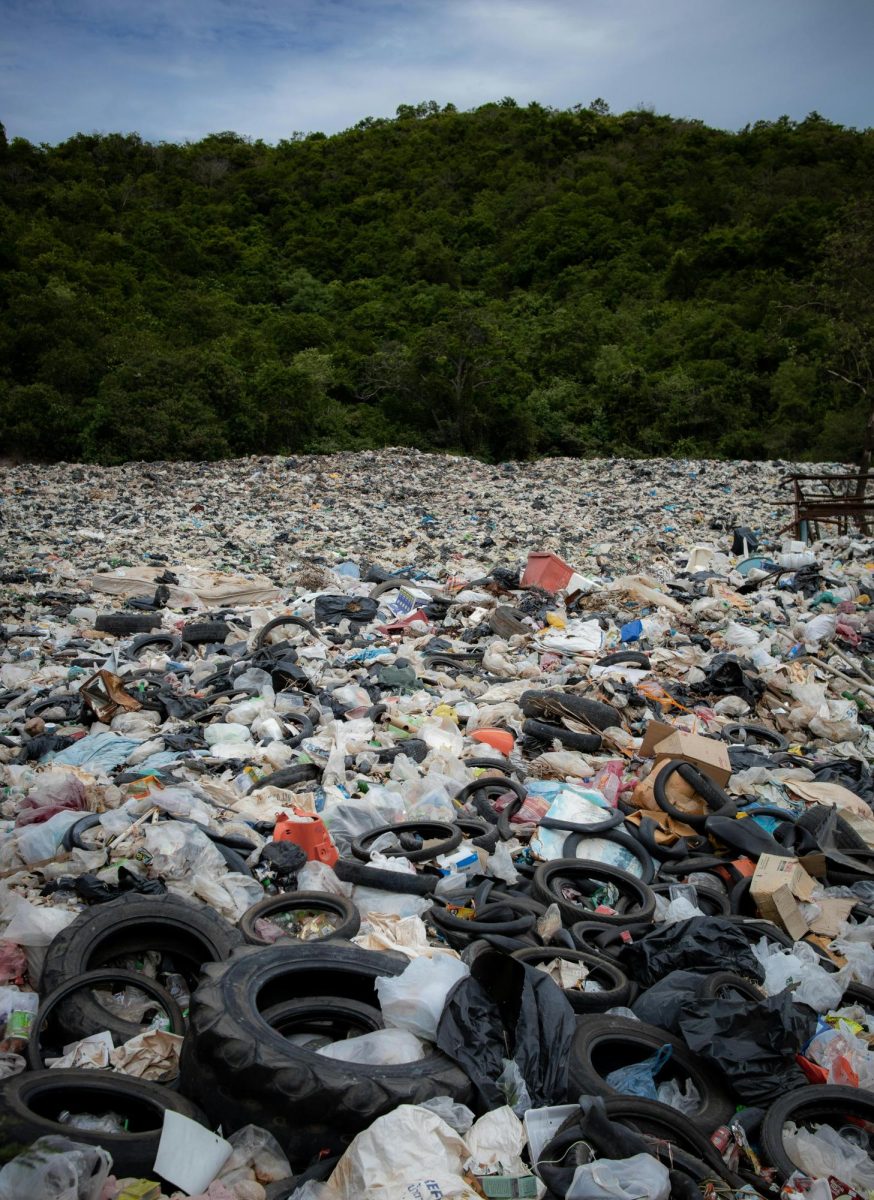
Earth Day has been a staple in sustainability movements for over 50 years. Students around the world use the day as a reminder to practice eco-conscious habits and appreciate the planet as a whole.
The first Earth Day was initiated on April 22, 1970 by Senator Gaylord Nelson as a means of raising public awareness of pollution. The celebration quickly gained traction with almost 200 countries observing the holiday in the years that followed.
Although Earth Day was originally supposed to encourage an eco-positive lifestyle, a Puma Press survey of 15 UPrep students found that 73% do not believe that humans take care of the Earth.
Ninth grader Alina Laramee says that current events have made the planet an afterthought.
“I feel like human beings are focused on so many other things and very self focused,” Laramee said. “I mean, with politics right now, people are usually thinking a lot about that and not really about caring for the earth.”
Sophomore May Williams does not celebrate Earth Day.
“Nobody really pays attention to it,” Williams said. “So then the next year, people don’t pay attention to it, and it’s like a cycle.”
However, the state of planet Earth has become a topic of global conversation with nearly 60% of youth reporting that they experience extreme eco-anxiety, according to UNICEF. Websites such as Climate Clock advertise real time countdowns until climate change is irreversible, making the situation increasingly difficult to ignore.
Laramee says that the issues causing climate change are fixable, as long as society is willing to make adjustments.
“We really love our fossil fuels, and we really love our huge trucks that have to get so much gasoline,” Laramee said. “People say we should do things that are good for the environment. But nobody’s like, ‘I am going to do those things.’”
According to Laramee, the UPrep community reflects a similar mindset.
“Students are pretty bad at sorting their garbage, and a lot of things are single-use plastics,” Laramee said.
According to Harvard, schools produce carbon emissions equivalent to 15 million cars each year.
Williams says that UPrep can make a difference simply by changing minor habits.
“I think being mindful about things like choosing the reusable bowls and the reusable utensils at lunch and carpooling to school,” Williams said. “Little things like that can help.”
Laramee says that students need more rigid guidelines from administration to truly change the way students view the consequences of their actions.
“I feel like we dance around doing things, but there isn’t a lot of like: we are actually going to do this,” Laramee said. “If you don’t do this, there will be constant consequences.”
