
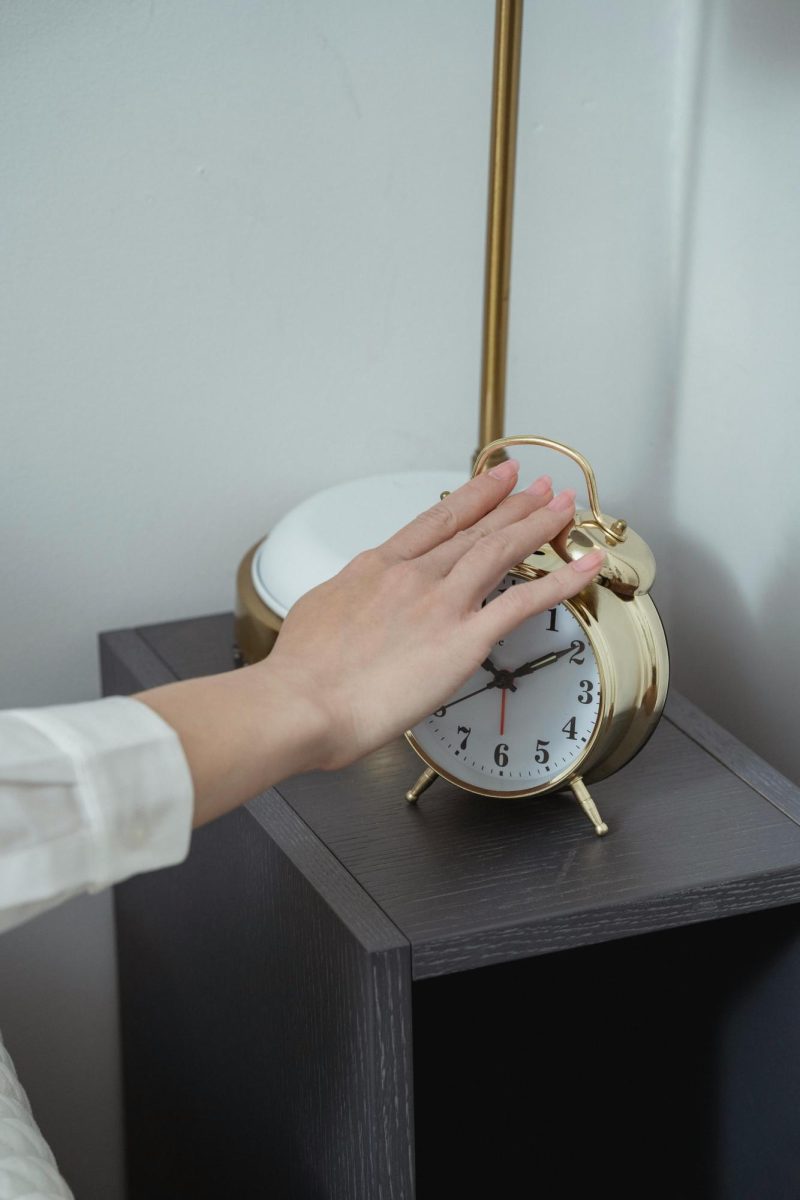
UPrep students lost one hour of sleep after daylight saving time made its first 2026 appearance on March 8. The semiannual clock change occurred at 2:00 a.m. last Sunday, leaving students like Grace Jin disoriented.
Although the time change is minimal, the 9th grader says that the small changes can cause large impacts on the lives of those affected.
“In the grand scheme of things, it’s actually not that much time, but it feels like a lot, because it completely offsets your routine,” Jin said.
However, routine is far from the only thing affected by the switch. According to Stanford Medicine, ceasing the usage of daylight saving time would prevent an estimated 300,000 strokes per year, and 2.6 million fewer people would struggle with obesity in the United States alone. Johns Hopkins reports similar findings, noting a 6% increase in the risk of fatal car accidents. This is largely due to a disruption in the body’s circadian rhythm, or “natural clock.”
Senior Paige Johnson says that an extra hour of sleep is crucial for students—especially learners in a program such as UPrep.
“I think as kids who often have a lot of work to do throughout the day and a lot of homework to do at night—every hour of sleep counts,” Johnson said.
Sleep is especially crucial for adolescents, and the loss of another hour may continue to affect students in the classroom for weeks to come. A 2015 study conducted by the Journal of Clinical Sleep Medicine discovered that students were sleepier, had slower reaction times and were less attentive during the school days that followed the time change.
According to Jin, daylight saving time prevents her from being fully present in a classroom environment.
“It’s not just that it’s hard to focus, concentrate and absorb the material,” Jin said. “It’s also that you lose the motivation to learn, and you kind of lose the interest that a lot of unique subjects give you.”
Stanford Medicine reports that nearly every year since 2018, Congress has attempted to pass numerous bills promoting either permanent standard time or daylight savin time—none have been passed. Until this issue is addressed, Jin says that students lack the proactivity to avoid the consequences that come with losing an hour of sleep.
“We just have no concept of being ahead of it,” Jin said. “So it kind of gets ahead of us instead of the other way around.”
