
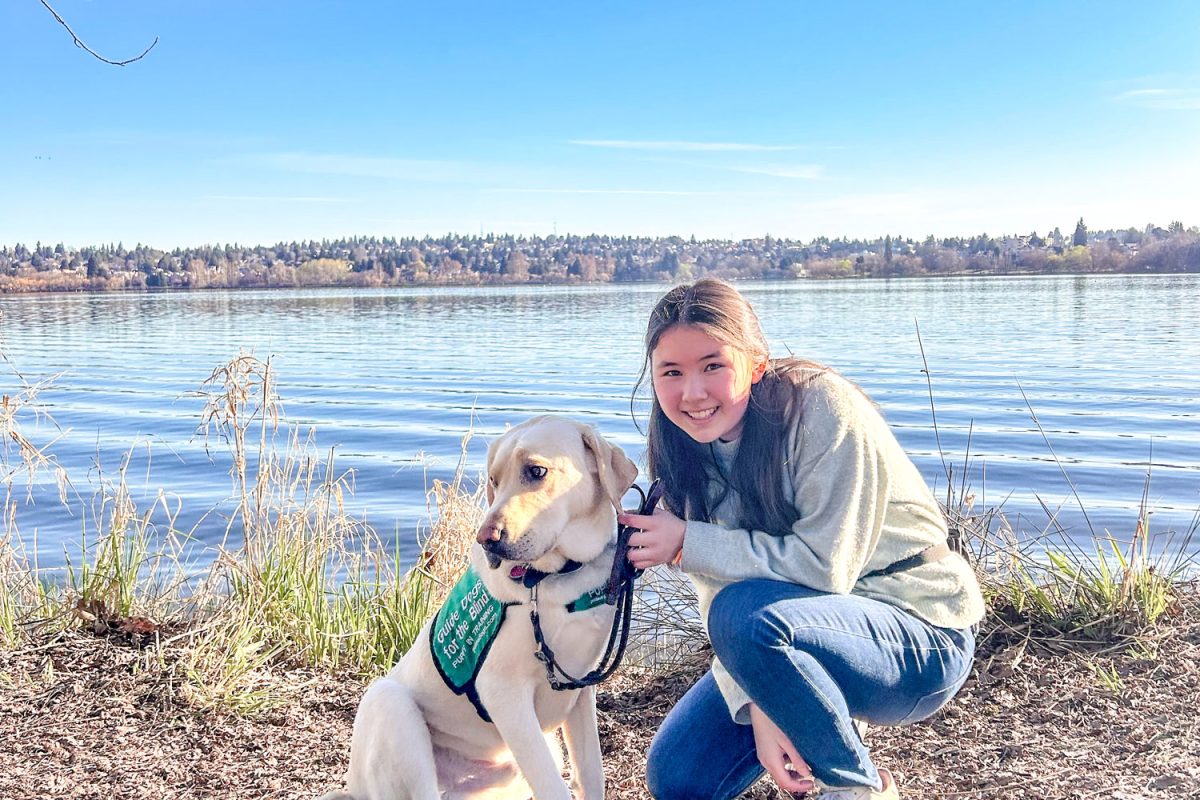
While other students are studying or hanging out with friends, sophomore Zoe Glass is training future service dogs for the nonprofit Guide Dogs for the Blind.
“I’d always wanted my own dog, but because I travel a lot, I couldn’t,” Glass said.
After talking with her parents, she began working with service dogs and now has three years of experience having raised a total of four dogs. She is currently raising two Labrador retrievers: Ladybug and Braiden.
“Ladybug is a very energetic puppy. She’s very smart, and she loves to use her mind,” Glass said. “Braiden, on the other hand, is just an overall very chill puppy.”
Glass is the leader of a small but growing club focused on educating students about what service dog work looks like. The club began last February and typically draws just under 10 students.
“It’s still a young club that we are developing,” club adviser Elena Tello Portoles said. “We’re still finding a way to be more active and present in our community.”
initially mentioned the idea of a Service Dog Club to Spanish teacher Elena Tello Portoles, who loved it. Despite her busy schedule, Tello Portoles plans and brings supplies to club meetings. The club’s main mission is education.
“During our meetings we want to bring attention to service dogs,” Tello Portoles said. “We want to educate people about what service dogs are and what they are not.”
Members also make thank-you cards or DIY dog toys to give to local animal shelters. Occasionally, they get to see in-person training.
“A few weeks ago, I got to bring in Ladybug. She did some training demos, and people got to ask questions and see a real service dog working,” Glass said.
The puppy raising process varies by organization, but it typically starts when puppies are just eight weeks old.
“We do basic training.” Tello Portoles said. We take them to training meetings and expose them to the world.”
Early training focuses on building confidence and calm behavior in everyday situations. Puppies practice sitting patiently in public places, walking through crowded environments and encountering unfamiliar sounds and surfaces, all while staying focused on their handler. The goal is to help puppies face their fears and be comfortable in uncomfortable situations. The puppies quickly learn through positive reinforcement.
“Tiny little puppies are so, so, so smart, and they learn very quickly that when they have good manners, they get treats,” Tello Portoles said. “They really really want to please, and they really, really want to get that treat.”
After months of foundational training, the dogs leave for specialized instruction tailored to future tasks like guiding, mobility assistance or medical alert work.
Glass’s previous dogs, Fillmore and Bengal, both went to special training. Bengal graduated in August, but Filmore didn’t complete the course. Instead, she was career changed, meaning she didn’t meet the high demands of being a guide dog.
Looking ahead, Service Dog Clubhopes to grow attendance, build ties with the larger community and encourage support for service dog organizations.
The club already sparked interest beyond upper school.
“There’s some middle schoolers who’ve contacted me because they’re really interested in it,” Glass said.
For now, however, Glass hopes to grow participation and continue to encourage support for service dog organizations.
